The free guide Chapter 9 of 10 ~6 min read
Working With Your Banker: Building a Strong Relationship
How to build a relationship with your banker that pays off before you need a loan, not just when you're applying for one.
Daniel's contracting firm was in its strongest year yet — over $12 million in revenue, multiple active projects, and growing demand. When a major client delayed a $900,000 payment, Daniel's primary banker stepped up within 48 hours, extending a temporary $750,000 line increase to bridge the gap. That single act kept payroll running, vendors paid, and confidence high. It wasn't luck — and after his rough patch two years earlier (Chapter 4), it wasn't an accident either. It was the return on years of deliberate relationship-building. This chapter is about how to earn that phone call.
Why the Banker Relationship Matters
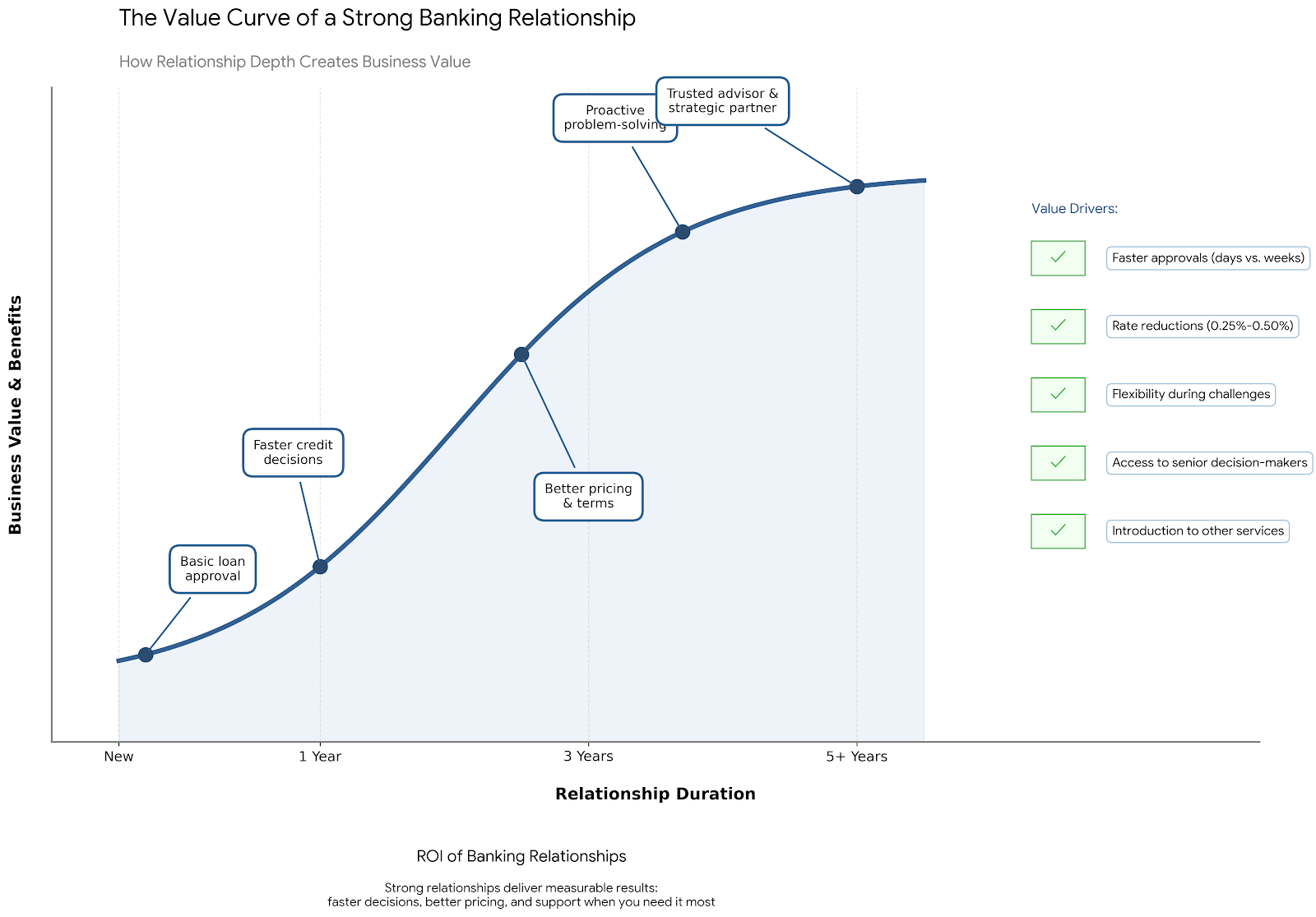
Your banker isn't just a lender — they're an advisor, an advocate, and your gateway to capital. Strong relationships deliver measurable ROI: faster credit decisions, better pricing, and flexibility when your business hits turbulence. A banker who understands your business can act before problems escalate. One who's meeting you for the first time during a crisis can only follow policy.
Who's Who at the Bank
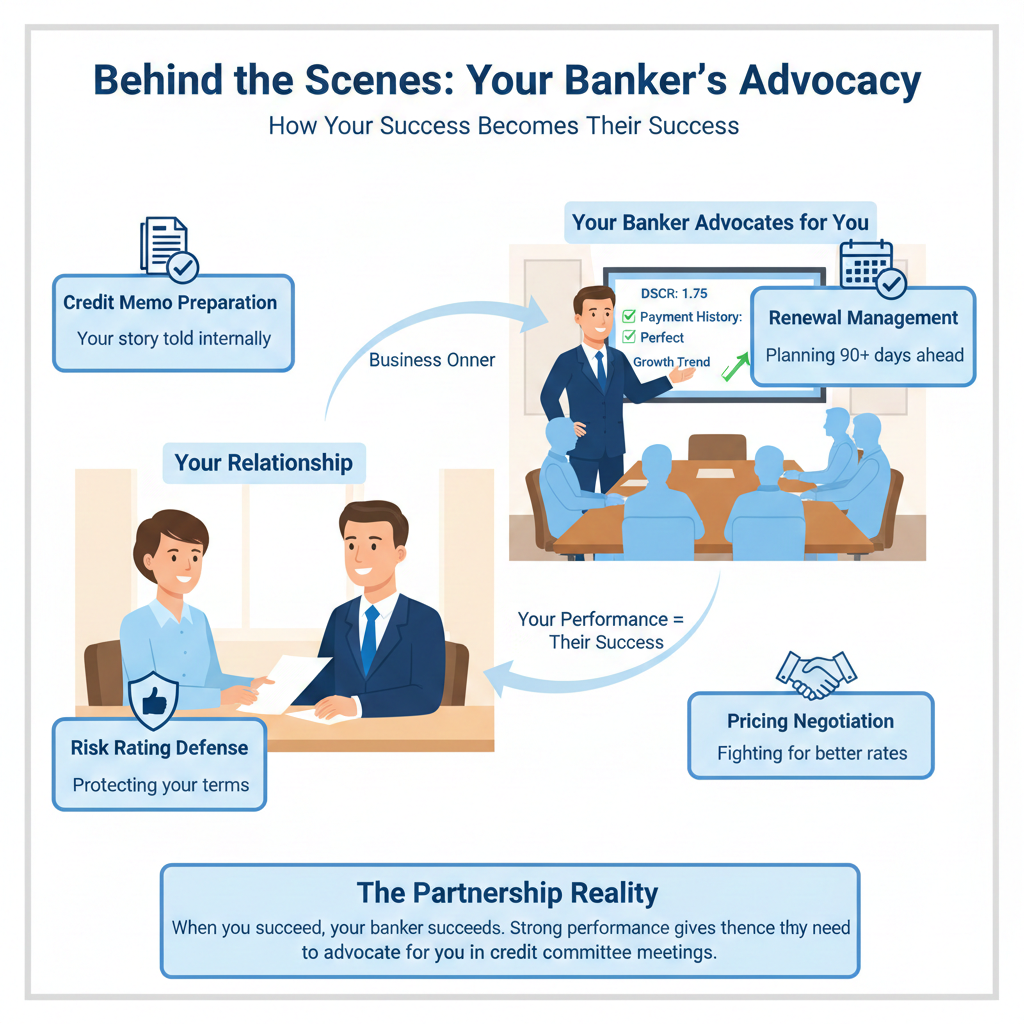
Understanding the cast makes you a better client. Your relationship manager (RM) is your primary contact — they package your requests, advocate for you internally, and manage the relationship. Behind them sits a credit officer or underwriter who analyzes the numbers and doesn't meet you — they know you only through your file and your RM's memo. A portfolio manager monitors your loans after closing (those covenant reports go to them). And a treasury officer handles the operating side: deposits, payments, fraud tools, sweep accounts.
Two practical implications. First, your RM's reputation inside the bank is partly built on how your company performs — when you look good, they look good, and that goodwill translates into advocacy in rooms you'll never enter. Second, because the person who decides your loan never meets you, everything you give your RM — clean statements, timely reports, honest explanations — is literally the raw material of your approval.
Build the Relationship Before You Need It
The best time to build a banking relationship is long before you need financing. A simple cadence does most of the work:
- Quarterly: send financial statements with a short cover note — three sentences on what happened and why. Unprompted.
- Twice a year: a real conversation — pipeline, hiring, equipment plans, worries. Invite your banker to the shop or job site; what they can picture, they can defend.
- Annually: a strategic review — where the business is going, what capital it will need in the next 24 months, and what the bank should be ready for.
- Before you act: major equipment, real estate, acquisitions, big new contracts — call before you commit, not after. Early conversations surface financing options while there's still time to use them.
Communicating During Challenges
Every business faces disruptions — delayed receivables, project overruns, a rough season. How you communicate defines the relationship. Daniel learned this the hard way in Chapter 4: the same bank that priced his surprise bridge painfully in his worst year approved a bigger one in 48 hours two years later. The difference wasn't the numbers — it was that the second time, his banker already knew the story, had current financials in hand, and had watched him execute a recovery plan before.
The playbook when trouble is forming:
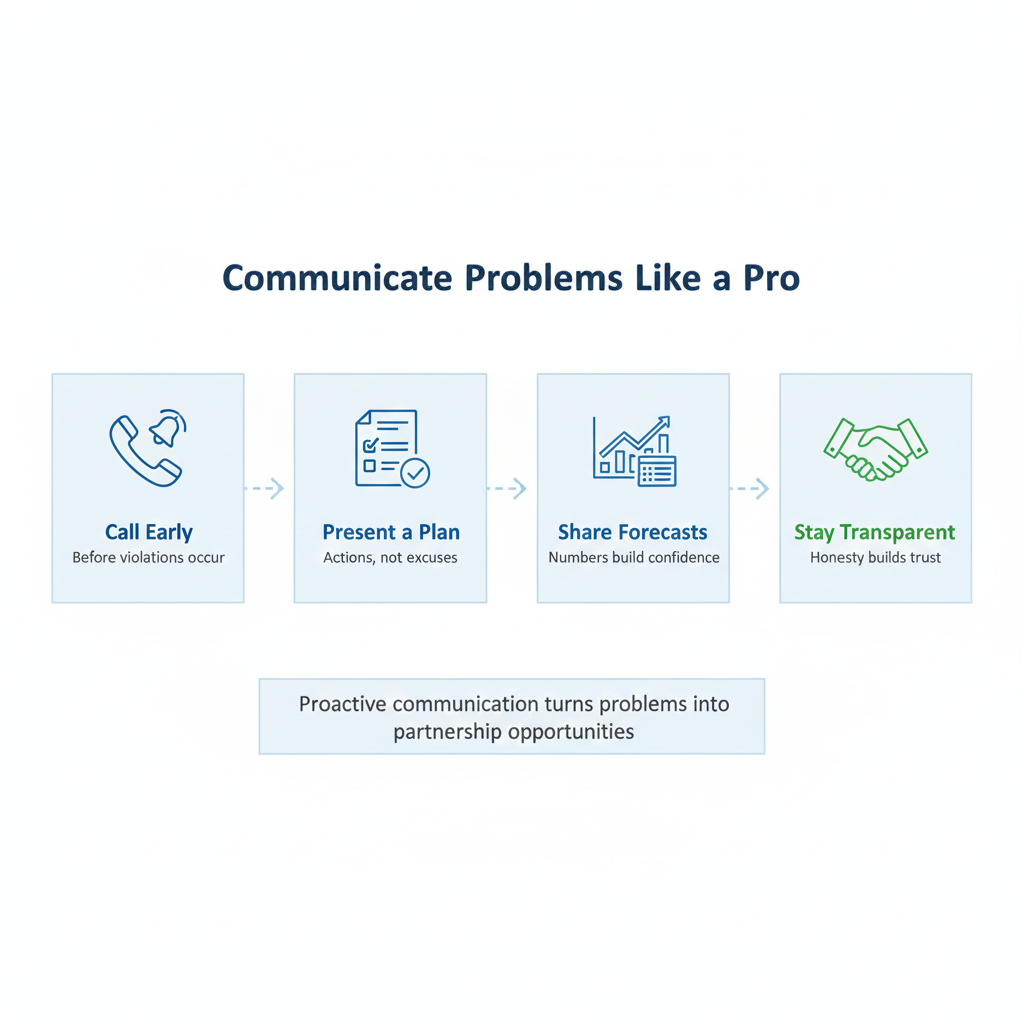
- Call early — before the covenant breaks, before payroll wobbles, before the bank finds out another way.
- Bring a plan, not an apology — specific actions, owners, and dates.
- Bring numbers — an updated 13-week forecast and receivables aging beat any narrative.
- Keep reporting current — even when (especially when) the news is bad.
Managing Multiple Banks — and Outgrowing One
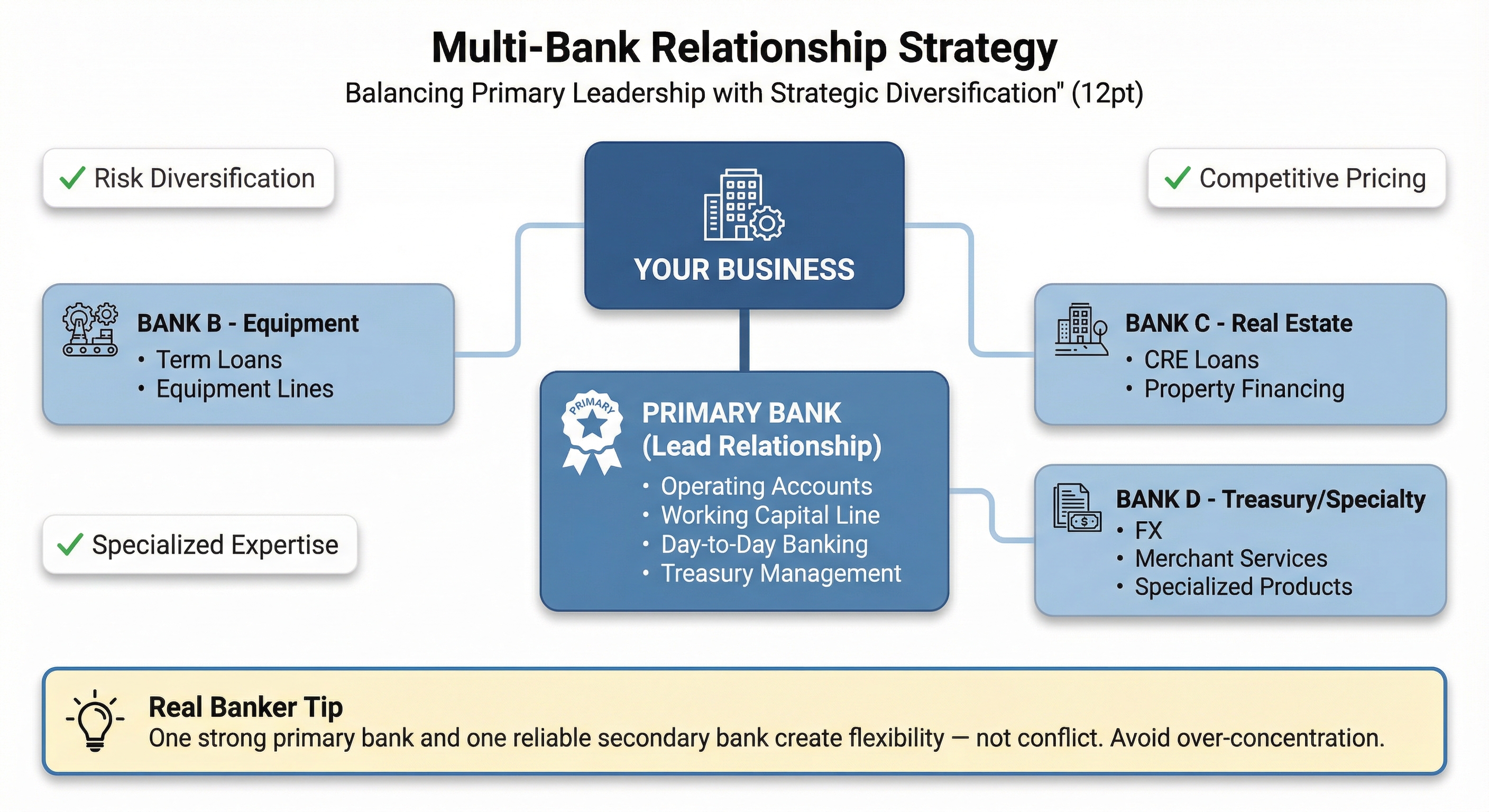
As your business grows, multiple banking relationships become inevitable — but they must be coordinated. Designate a lead bank for operating accounts and your working capital line; maintain a secondary relationship for equipment, real estate, or specialized needs; and run a friendly RFP every few years to keep everyone sharp. Avoid over-concentration with one institution — even trusted partners change credit appetite.
Sometimes the honest answer is that you've outgrown your bank. Maria hit this point: the community bank that gave her a first $100,000 line couldn't stretch to the $750,000 borrowing-base facility her growth required. She handled the switch the right way — told her banker directly, asked for a referral (banks would rather hand you to a friendly peer than lose you badly), kept the old relationship for a deposit account, and moved without burning anything. Eighteen months later, her original banker sent her a customer referral. Exits are remembered as vividly as entrances.
The Banker's Perspective
My best clients make me part of their business rhythm. They share quarterly results, invite me to walkthroughs, and call before making major financial decisions. When they hit a rough patch, I already know their history, their management strength, and their recovery record — which makes advocating for them easy. Bankers measure loyalty through transparency. I can work with a client having a bad year; I can't work with one who hides it. Your banker's confidence in you is worth more than any single ratio on your statement.
Key Takeaways
- The person who approves your loan will never meet you — your file and your RM's advocacy are your voice.
- A simple cadence (quarterly statements, semiannual conversations, annual strategy) builds the relationship before you need it.
- In trouble: call early, bring a plan, bring numbers, keep reporting. Surprises cost more than setbacks.
- Know that you carry an internal risk rating — timely reporting and current information protect it.
- Diversify banking relationships deliberately, and exit gracefully when you outgrow one.
Questions to Ask Yourself
- When did my banker last hear from me when I didn't need something?
- Does my banker understand my three-year growth plan well enough to repeat it?
- If trouble started today, how many weeks of current financials would my bank already have?
- Am I over-concentrated with one institution — or fragmented across too many?
- Has my business outgrown my bank's comfortable lending size — or is it about to?